Charlie Lawson Family Tragedy: The Christmas Murders That Still Haunt America
The Charlie Lawson family tragedy remains one of the most disturbing and heartbreaking stories in American history. On Christmas Day in 1929, a quiet farming family in rural North Carolina was destroyed in an act of violence so shocking that it continues to be discussed nearly a century later. What makes the Lawson case endure is not just the brutality of the crime, but the mystery surrounding why it happened at all. The family appeared ordinary, the setting was familiar, and the answers were never clear—leaving behind a story that still unsettles anyone who learns about it.
Who Was Charlie Lawson?
Charlie Lawson, whose full name was Charles Davis Lawson, was a farmer living in Stokes County, North Carolina, near the small community of Germanton. He worked as a sharecropper, supporting his family through physically demanding labor during a time when rural life was hard and economic security was fragile.
By most accounts, Lawson was not known as a violent or abusive man. Neighbors described him as reserved and hardworking. This ordinary reputation is one of the most chilling aspects of the story—there were no widely recognized warning signs that foreshadowed what would happen.
The Lawson Family Before the Tragedy
Charlie Lawson was married to Fannie Lawson, and together they had seven children living at home. Like many rural families of the era, they lived modestly, relying on farm work and close family ties to get by.
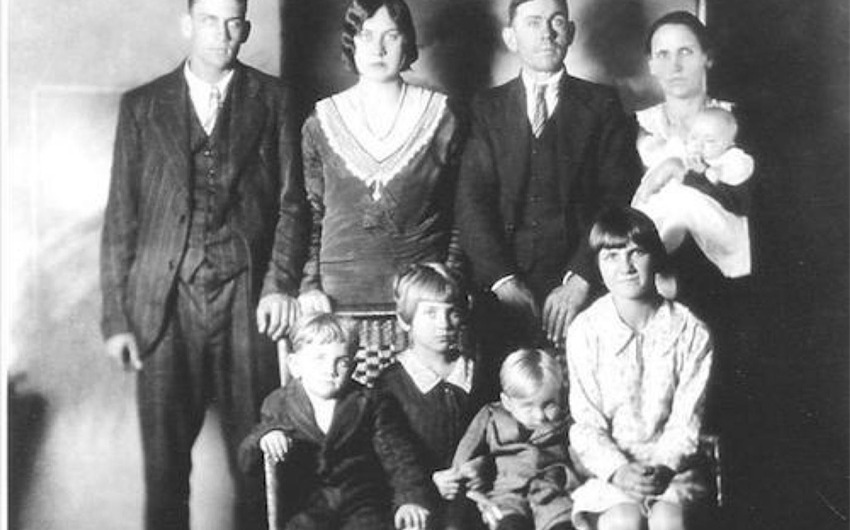
In the days leading up to Christmas 1929, Lawson did something that later struck many as unusual: he took his family into town, bought them new clothes, and had a professional family photograph taken. The image shows a neatly dressed family posing calmly, unaware—or perhaps knowingly—standing just days away from disaster. That photograph has since become one of the most haunting symbols of the case.
The Events of Christmas Day, 1929
On December 25, 1929, Charlie Lawson carried out the murders on his family property. What is known comes from historical records and community accounts, but many details were never fully documented.
Before the killings began, Lawson sent his eldest son, Arthur, away on an errand. This single action would ultimately spare Arthur’s life and has led many historians to believe the murders were planned rather than impulsive.
Over the course of that afternoon, Lawson killed his wife and six of his children. Afterward, he went into nearby woods and took his own life. By the time Arthur returned home, his entire family—except himself—was gone.
Victims of the Lawson Family Murders
The victims of the tragedy were:
-
Fannie Lawson, Charlie’s wife
-
Marie Lawson
-
Carrie Lawson
-
Maybell Lawson
-
James Lawson
-
Raymond Lawson
-
Mary Lou Lawson, an infant
The sole survivor was Arthur Lawson, saved only because his father deliberately sent him away before the murders began.
The loss devastated the local community. In an era before instant communication, word spread quickly by neighbors and church members, drawing people to the property in shock and disbelief.
Immediate Aftermath and Limited Investigation
By modern standards, the investigation into the Lawson murders was minimal. Law enforcement in 1929 lacked forensic technology, psychological profiling, and structured crime scene analysis. There was no surviving perpetrator to interrogate, and no detailed written confession to study.
As a result, no definitive motive was ever established. That absence of clear explanation is one of the main reasons the case still attracts attention today. When answers are missing, speculation fills the gap.
Possible Motives and Theories
Over the decades, several theories have emerged, though none can be proven conclusively.
Mental illness or psychological collapse
One widely accepted explanation is that Charlie Lawson suffered a severe mental breakdown. Depression, paranoia, or another untreated mental illness may have played a role. At the time, mental health care—especially in rural communities—was virtually nonexistent.
Economic stress
The murders occurred shortly after the 1929 stock market crash, at the onset of the Great Depression. While Lawson’s family may not have been directly tied to financial markets, economic hardship and uncertainty were widespread. Financial pressure alone does not explain violence, but it may have intensified feelings of hopelessness or desperation.
Rumors and unproven allegations
The most controversial theory involves rumors of incest involving one of Lawson’s daughters. These claims have circulated for decades but were never proven and remain speculative. Responsible historical accounts treat these allegations cautiously, acknowledging their existence while emphasizing the lack of solid evidence.
The Surviving Son: Arthur Lawson
Arthur Lawson’s survival adds another layer of tragedy to the story. He returned home to discover the devastation left behind, and his life afterward was shaped by trauma few could comprehend.
Historical records offer limited insight into Arthur’s emotional journey. Mental health support was scarce, and personal grief was often handled privately. What is known is that Arthur carried the weight of being the only survivor—a burden that would have followed him for the rest of his life.
Public Reaction and Media Coverage
Even in 1929, the Lawson murders gained national attention. Newspapers reported on the killings with a mix of shock and moral reflection, emphasizing the contrast between the family’s ordinary appearance and the horror of the crime.
The family photograph taken shortly before the murders became central to public fascination. It humanized the victims while also deepening the mystery, making it harder to dismiss the crime as something distant or abstract.
Cultural Legacy and Folklore
Over time, the Charlie Lawson family tragedy moved beyond newsprint into folklore. Songs, books, and local legends kept the story alive, sometimes blending fact with myth. The family home reportedly became associated with ghost stories and dark tourism, further blurring the line between remembrance and sensationalism.
This cultural afterlife is complex. While storytelling can help communities process trauma, it can also risk turning real suffering into entertainment. The most responsible retellings strive to center the victims rather than the spectacle.
Featured Image Source: dncr.nc.gov