The Hidden Cost of Always Staying Busy and the Life It Quietly Steals
Staying busy can look responsible, productive, even impressive. But the hidden cost of always staying busy is that it slowly trades depth for motion. You might keep up with everything and still feel strangely behind, not because you aren’t doing enough, but because busyness can quietly take your clarity, energy, and sense of being present in your own life.
How Busyness Became a Social Currency
Somewhere along the way, “busy” turned into a polite status symbol. It’s a quick way to prove you matter, that you’re needed, that you’re doing something with your time. In many environments, being busy signals ambition. It reassures people you’re reliable. It can even feel like protection from judgment.
But when busyness becomes a currency, it stops being a practical description of your schedule and starts becoming part of your identity. You don’t just have a full week. You are the kind of person who is always full. Always on. Always in motion.
This is when busyness stops serving you and starts shaping you.
The First Cost: Your Attention Becomes Fragmented
One of the most immediate effects of constant busyness is that your attention becomes scattered. You live in short bursts of focus. You bounce between tasks. You respond to what’s in front of you instead of choosing what deserves your mind.
This doesn’t always feel dramatic at first. It looks like checking your phone more often. It looks like rereading the same email twice. It looks like forgetting what you walked into a room to do.
Over time, it becomes a deeper pattern: you lose the ability to think in long, continuous lines. Your mind becomes trained for quick replies, not clear reasoning. Even in quiet moments, your thoughts may jump around like they’re searching for the next demand.
This fragmentation is exhausting because your brain is constantly switching contexts. And context switching is not free. It drains focus, increases mental fatigue, and makes simple tasks feel heavier than they should.
The Second Cost: Your Nervous System Lives on Alert
Busyness isn’t only about time. It’s also about your internal state. When life is always full, your nervous system rarely gets to settle.
Even when you’re technically resting, you may feel like you should be doing something else. Even when you finish a task, the relief is brief because the next thing is already waiting. This creates a subtle, constant sense of urgency.
Over time, your body learns that “normal” means alert. Your baseline becomes tension. And when tension becomes normal, calm can feel unfamiliar.
This is one of the hidden costs people don’t notice until later. They think they’re simply managing a busy life, but what they’re really managing is a constant low-grade stress response.
The Third Cost: You Lose the Ability to Hear Yourself Think
Busyness fills the gaps where your own thoughts would otherwise speak. It replaces reflection with reaction.
When you stay busy, you may not notice what you feel until it spills out sideways. You may not realize you’re burnt out until your patience disappears. You may not realize you’re unhappy until you can’t enjoy anything, even the things you once loved.
Busyness can keep you from feeling what needs to be felt. It can keep you from asking the questions that would change your life. It can keep you from noticing what you’ve outgrown.
This is why people can be productive for years and still wake up one day feeling disconnected. They were moving, but they were not listening.
The Fourth Cost: Relationships Become Squeezed, Not Lived
When life is packed, relationships often become something you fit in. Conversations get shortened. Presence becomes partial. Time together becomes a quick catch-up rather than a shared experience.
You can love people deeply and still not truly be with them if you’re always rushing. And the thing about relationships is that they don’t thrive on intention alone. They thrive on attention.
Busyness also affects how you show up emotionally. When you’re overextended, you’re more reactive. You have less patience. You listen less well. You interpret things through fatigue. Even small misunderstandings can feel sharper when your capacity is thin.
The hidden cost is not just less time with others. It’s less quality in the time you do have.
The Fifth Cost: You Start Measuring Worth by Output
One of the most damaging effects of constant busyness is how it reshapes self-worth. When you are always doing, you begin to associate being valuable with being productive.
This creates a harsh internal economy. Rest feels like debt. Stillness feels like laziness. A quiet day feels suspicious, as if something must be wrong.
Over time, you may lose the ability to enjoy life without earning it first. You might only allow yourself peace after you’ve “done enough,” but the definition of enough keeps moving.
This is a painful way to live because it makes your worth conditional. It turns your life into an endless negotiation with yourself.
Busyness Can Be a Form of Avoidance
Not all busyness is necessary. Some of it is chosen. And some of it is chosen because it keeps you from facing uncomfortable truths.
Busyness can protect you from asking questions like:
- What do I actually want?
- Why do I feel restless when things are “fine”?
- Is this path still mine, or am I just continuing it?
- What feeling am I trying not to feel?
When your schedule is full, you don’t have to sit with silence. You don’t have to confront grief, loneliness, uncertainty, or dissatisfaction. You can keep moving instead.
This doesn’t make you weak. It makes you human. But it does mean that constant busyness can delay the very clarity you’re searching for.
The Illusion of Control
Busyness can also feel like control. When you are constantly doing, it can feel like you are managing life effectively. You are keeping things from falling apart. You are staying ahead.
But much of this control is an illusion. Over time, constant busyness doesn’t create stability. It creates fragility. When your life requires you to run at maximum capacity just to keep up, any unexpected change becomes overwhelming.
True stability isn’t built by doing everything. It’s built by creating margin—space where life can shift without breaking you.
The Subtle Grief of a Life That Moves Too Fast
There is a quiet kind of grief that comes from moving too fast to notice your own life.
You might look back on months that felt like a blur. You might realize you don’t remember certain seasons clearly because you were always focused on what came next. You might notice that even achievements felt thin because you never had time to absorb them.
Busyness can steal the feeling of living. You still do the days. You still complete the tasks. But the texture of life—its depth, its meaning, its moments—gets flattened.
This is one of the most hidden costs of all. Not exhaustion, but the subtle loss of presence.
Signs You’re Paying the Cost Without Realizing It
Busyness doesn’t always announce itself as a problem. It often disguises itself as responsibility. But there are signs that you may be paying the hidden cost:
- You feel tired even when you sleep.
- You struggle to focus for long periods.
- You feel irritated by small interruptions.
- You can’t fully relax without guilt.
- You keep planning a “reset” but never reach it.
- You feel disconnected from what you want.
These signs aren’t moral failures. They’re signals of capacity being exceeded.
What Changes When You Stop Treating Busy as Normal
The first thing that changes is that you begin to notice what you’ve been carrying. You see the obligations you accepted automatically. You see the “yes” decisions you made out of guilt or fear. You see where your attention is leaking.
And once you see it, you gain choice. You can begin to simplify.
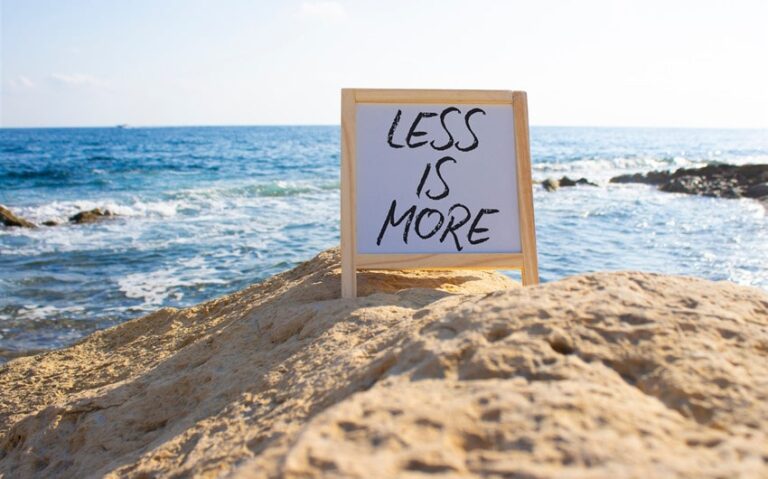
Simplifying isn’t about doing nothing. It’s about doing fewer things on purpose. It’s about replacing constant motion with deliberate direction.
Small, Realistic Ways to Step Out of Chronic Busyness
You don’t have to overhaul your entire life to change your relationship with busyness. Small reductions create meaningful relief. Here are a few that actually work:
- Create margin between commitments. Stop scheduling your day like it can’t breathe.
- Reduce unnecessary responsiveness. Not everything needs an immediate reply.
- Choose one daily priority. Let the day be complete without doing everything.
- End open loops. Write down the next step so your mind can let go.
- Protect a quiet window. Even 30 minutes without input can restore clarity.
These aren’t hacks. They’re choices that reduce pressure on your attention and nervous system.
A Better Measure: Enough, Not Everything
One of the most powerful shifts is replacing “everything” with “enough.”
Enough means you did what mattered. Enough means you protected your capacity. Enough means you lived the day, not just managed it.
When you begin to accept enough, you regain access to calm. You regain access to deeper thinking. You regain access to your own life.
Living With Less Rush and More Reality
The hidden cost of always staying busy is not simply exhaustion. It’s what busyness quietly steals: your attention, your steadiness, your relationships, and your ability to feel present in your own experience.
Doing less isn’t a retreat from life. It’s a return to it. It’s choosing a pace where you can think clearly, live intentionally, and actually notice the days as you move through them.
In the end, the goal isn’t to become someone who never gets busy. The goal is to stop building a life that requires constant busyness just to feel okay.