Vlad and Niki Parents Net Worth: What Sergey and Victoria Likely Earn
If you’re searching for vlad and niki parents net worth, you’re really trying to estimate the wealth of the business behind one of the biggest kids’ YouTube empires on the planet. The honest answer is that there’s no single verified public number, because most of the money flows through private companies, licensing deals, and platform revenue that isn’t fully transparent. Still, you can get surprisingly close by understanding how this kind of family brand earns—and what costs quietly eat into the headline totals.
Who are Vlad and Niki’s parents, and why their wealth is “business-shaped”
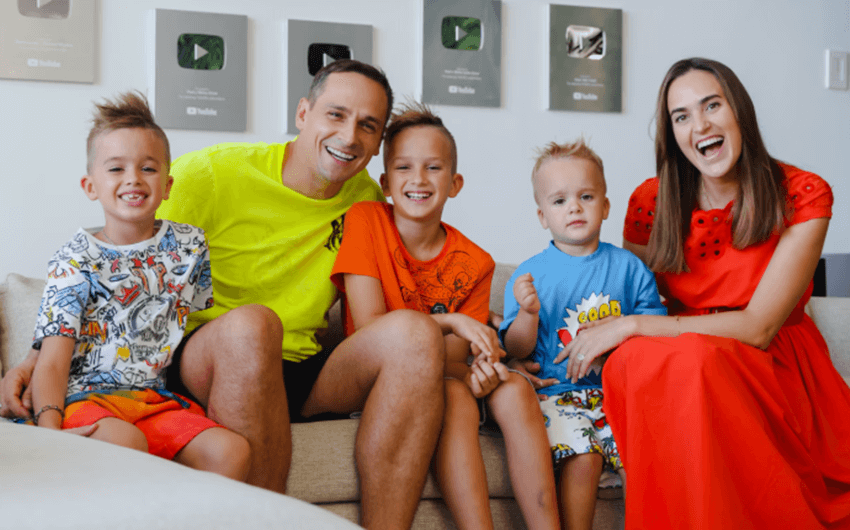
Vlad and Niki’s parents—most often identified publicly as Sergey and Victoria—don’t just appear in videos. They’re the operators of a full-scale children’s media brand. That matters because “net worth” here isn’t mainly about salary from a job. It’s about ownership: who controls the channels, the trademarks, the licensing rights, the merch deals, and the partnerships that turn views into a global business.
Think of it less like “parents who went viral” and more like “parents who built a mini studio.” The studio just happens to star their kids, and it earns money in the same way large entertainment brands do: content distribution, product licensing, sponsorship, and brand extensions.
Why net worth estimates vary so wildly online
You’ll see internet estimates ranging from “only a few million” to “over a hundred million.” The spread happens for a few reasons:
- YouTube revenue is not a fixed rate. Ads pay differently depending on country, season, viewer device, and ad inventory.
- The biggest money may be off YouTube. Licensing and consumer products can outperform ad revenue once a kids’ brand reaches global scale.
- “Family brand value” gets confused with “personal net worth.” A brand can be worth tens of millions while the parents’ personal net worth is lower because of taxes, reinvestment, staff, and business structure.
- Private-company finances aren’t public. Without audited statements, every number is an estimate built from assumptions.
So instead of chasing one “official” figure that doesn’t exist, the more realistic approach is to talk in ranges and explain what could push the number up or down.
A realistic net worth range for Vlad and Niki’s parents
Most grounded discussions place the family’s overall wealth in the tens of millions, with many plausible scenarios reaching into the very high tens of millions and some estimates pushing into the low hundreds of millions when people treat the entire brand as an asset.
A cautious, reality-based way to frame it in 2026 is:
- Personal family net worth: likely in the multi-million to high multi-million range.
- Family brand value (channels + licensing + products): plausibly in the $50 million to $120 million range, depending on how aggressively you value their licensing and consumer-product footprint.
That might sound like a big gap, but it’s normal for creator businesses. A brand can be huge while personal wealth is smaller, especially when the founders are reinvesting heavily to keep growth going.
Where the money comes from
To understand Sergey and Victoria’s wealth, you have to understand the revenue mix. For a kids’ channel at this scale, the money typically comes from several major lanes.
YouTube ad revenue across multiple channels and languages
Kids’ channels can generate enormous view counts because children rewatch content repeatedly. When a brand also operates multiple channels (often across different languages and regions), total views can become massive—sometimes on a scale that makes normal influencer math look tiny.
Ad revenue is often the first major engine, but it’s not always the most profitable long-term engine. It can also be volatile. Changes in platform rules, ad suitability policies, and regional monetization can cause big swings year to year.
Sponsorships and brand partnerships
Brands love kids’ content because it reaches families at scale. Sponsorships can include product placement, themed episodes, co-branded campaigns, or broader partnerships that run across social platforms.
For a family brand, sponsorships can be high-margin revenue, but they can also come with strict requirements: brand safety rules, creative approvals, and extra production demands that raise costs.
Licensing deals
Licensing is where kids’ media brands often become seriously wealthy. If a brand’s characters, style, and recognition are strong, companies will pay to put that brand on:
- toys and playsets
- kids’ clothing
- school supplies
- books and activity products
- apps and games
Licensing can scale quickly because the family doesn’t have to manufacture everything themselves. They license the brand, collect royalties, and let established consumer-product companies handle production and distribution.
Merchandise and direct-to-consumer sales
Some creator brands go beyond licensing and sell products more directly. The advantage is higher margins and more control. The downside is operational complexity: inventory, fulfillment, customer service, returns, quality control, and fraud prevention.
When it works, merchandise becomes a reliable profit center that can be steadier than ad revenue.
Apps, games, and digital products
Kids’ brands often expand into games and apps because the audience already lives on screens. Digital products can generate revenue through paid downloads, in-app purchases, subscription features, or advertising.
This lane can be extremely profitable if the brand is strong and the product is well-built—but it also requires ongoing updates, compliance with child-safety rules, and technical overhead.
What costs reduce the “headline” numbers
When people hear “massive views,” they imagine the parents personally banking every dollar. In reality, a global kids’ brand has heavy costs. These costs are a big reason personal net worth may be lower than the brand’s perceived value.
Production costs
Even if videos look simple, large-scale output requires planning, props, locations, editing, music, translation, thumbnails, and scheduling. Many big kids’ channels operate like small studios with full-time staff.
Staff, management, and legal
A brand at this level usually involves editors, producers, channel managers, accountants, attorneys, brand managers, licensing agents, and sometimes security or travel support. These professionals take salaries or fees, and some take commissions.
Platform risk and compliance
Kids’ content is heavily regulated on major platforms. Compliance with advertising rules for children, privacy standards, and platform policy changes can add costs and limit certain monetization options.
Taxes and international complexity
A globally watched brand often has international revenue, international licensing, and multi-country business activity. Taxes can be enormous, and cross-border structures can be expensive to manage correctly.
Reinvestment
The most aggressive growth strategy is to reinvest revenue into expanding the brand: new languages, better production, new product lines, marketing, and broader distribution. Reinvestment increases long-term value, but it can slow down how quickly the founders convert revenue into personal wealth.
Why “parents’ net worth” isn’t the same as “Vlad and Niki net worth”
Another reason the internet gets this wrong is that it treats the children’s fame as if the kids personally control everything. In reality, minors typically do not run the business side. Parents and business entities control the channels, contracts, trademarks, and licensing arrangements.
That means:
- The brand’s earnings can be huge.
- The parents can be wealthy because they likely own and control the business infrastructure.
- But the money may be split between the business, savings for the children, taxes, and ongoing operating costs.
So yes, the parents can be very wealthy—yet still not match the most exaggerated online claims that assume every dollar of gross revenue becomes personal net worth.
What would make Sergey and Victoria’s net worth go up significantly?
If their wealth increases sharply over time, it would likely be driven by one of these events:
- A major licensing expansion that turns the brand into a dominant toy and consumer-products property in more regions.
- A large acquisition or investment where a media company buys a stake in the brand or its parent company.
- Successfully owning more of the supply chain (higher margins through direct-to-consumer operations).
- Long-term catalog durability where views remain strong even as the kids grow older, meaning the content becomes evergreen.
In creator businesses, the biggest “net worth jump” often happens when a brand is valued as an asset in a sale or partial buyout—not just from monthly ad checks.
What could reduce their net worth?
On the other hand, several risks can reduce wealth even for a massive channel:
- Platform policy changes that reduce monetization for kids’ content.
- Audience aging where the brand struggles to stay relevant to new young viewers.
- Overexpansion that increases costs faster than revenue.
- Brand dilution if too many products or low-quality partnerships weaken trust.
The strongest kids’ brands avoid these by treating the channel like a long-term company, not a short-term viral moment.
Bottom line
There is no verified public figure for Vlad and Niki’s parents’ net worth, but the most realistic 2026 view is that Sergey and Victoria likely have multi-million-dollar personal wealth, and they may control a family brand whose total business value plausibly sits in the tens of millions—sometimes reasonably estimated in a broad $50 million to $120 million range depending on how you value licensing, product deals, and the long-term strength of their channel network. The key is understanding that the biggest wealth here isn’t just YouTube ads—it’s the business machine built around a global kids’ brand.
image source: https://www.wsj.com/story/these-kids-are-raking-in-millions-from-youtube-theyre-not-even-10-b7d0f781